How the evidence works
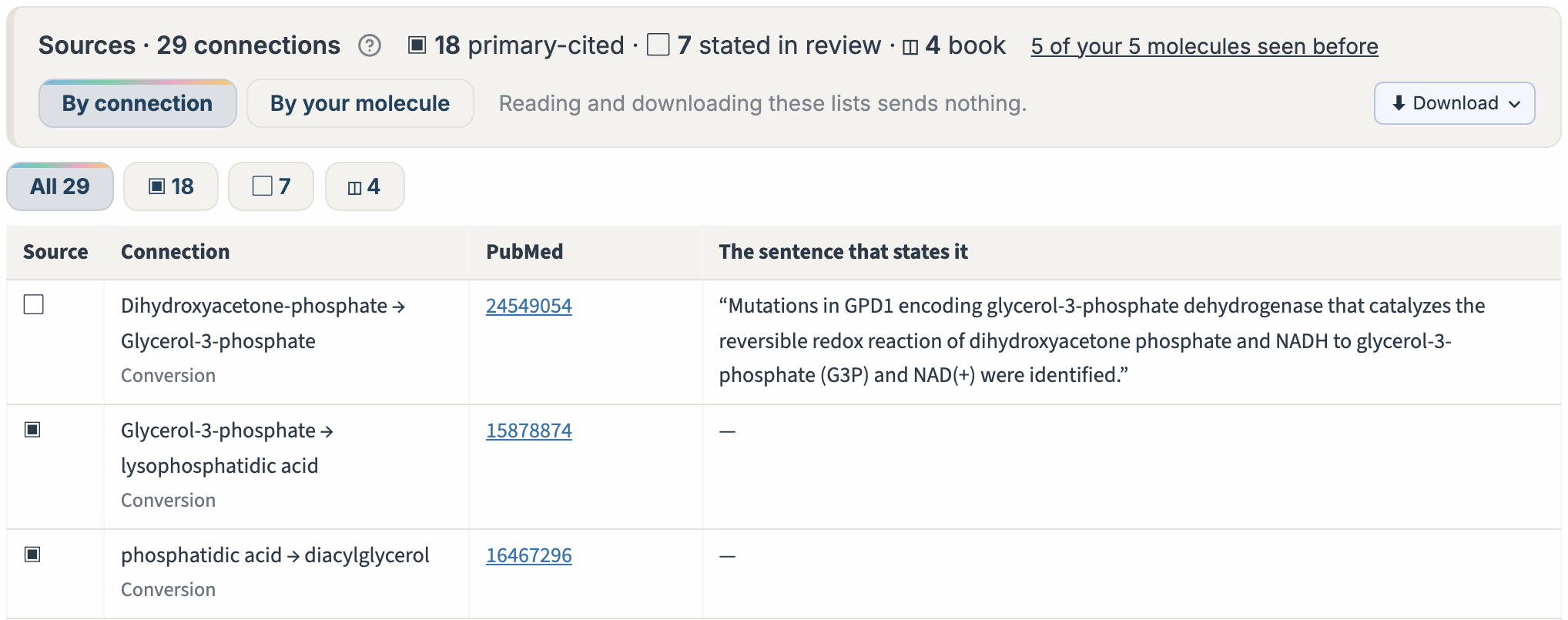
Each shown connection in an Anvesh diagram carries a mark for its source: a research paper, a review, a book, or none linked. Under every diagram, the Sources list shows where each one comes from, so you can read it yourself.
What each mark means
▣ primary-cited
Cited to a research article that reports the connection.
▢ stated in review
Cited to a review article that states the connection.
◫ book
Cited to a textbook, by chapter and section or page.
“ ” with the sentence
Where we have it, the sentence from the source that states the connection.
◦ no citation yet
The connection is shown, but Anvesh holds no source for it.
The Sources list under each diagram
Count each kind of source, filter by it, and open each paper on PubMed. Opening or downloading the list sends nothing to any AI service.
Built with AI assistance, from the literature
AI-assisted and literature-derived. Each shown connection is marked with its source where Anvesh holds one. Anvesh can contain errors, so read the source. Research use only, not clinical.